The Ultimate Guide to Migraine Relief (And How to Get Rid of One Fast)
If you’re here looking for migraine relief, you’re in the right place. This is not a post about generic headache remedies; if that’s what you need, check out How to Get Rid of a Headache: 12 Natural Remedies for Fast Headache Relief.
This post is specifically about migraines; the kind that take you completely out of commission, make light feel like a personal attack, and sometimes arrive with their own dramatic warning show.
We’re going deep on what actually causes them, how to recognize them, how to get rid of a migraine fast when one hits, and what to do so they stop running your life.
Wait, Is This Actually a Migraine?
This is the question nobody answers clearly, so let’s fix that right now, because knowing what you’re dealing with changes everything.
A migraine is a neurological condition, not just a bad headache. Here’s what that actually means for your body:
Where it hurts: Most often, one side of your head; the temple, behind one eye, or the forehead on one side. It throbs or pulses, and it almost always gets worse when you move around or bend down. Some people feel it behind both eyes or across the whole front of the head, but the one-sided throbbing is a classic migraine signature.
How bad it is: A tension headache (the “I’ve been staring at a screen for six hours” kind) is mild to moderate and doesn’t fully stop you from functioning. A migraine is moderate to severe and makes it genuinely hard to work, talk, or exist like a normal human. If you’ve had one, you know.
The extra symptoms: This is the biggest difference. A migraine almost always comes with at least one of these: nausea, sensitivity to light (even a lamp across the room feels blinding), sensitivity to sound (every noise is too loud), and sometimes sensitivity to smell. Some people experience what’s called a migraine aura before the pain starts; visual disturbances like zigzag lines, blind spots, or flashing lights. If you’ve ever wondered what that was, now you know.
How long it lasts: A regular headache usually clears in an hour or two. A migraine lasts anywhere from 4 hours to 3 full days. Yes, days.
Your migraine checklist:
✅ Pain on one side of the head (usually)
✅ Throbbing or pulsating sensation
✅ Nausea or vomiting
✅ Light sensitivity (you want a completely dark room)
✅ Sound sensitivity (noise makes it worse)
✅ It gets worse when you move
✅ It lasts more than 4 hours
If you check three or more of those boxes, what you have is almost certainly a migraine, not just a headache. Welcome to the club nobody asked to join. And if you’re not sure whether your headaches are migraines or something else, this breakdown of The Different Types of Headaches and the Relief for Each might help you figure it out.
The Real Migraine Triggers Nobody Talks About
Everyone knows about stress and red wine. Let’s go deeper.
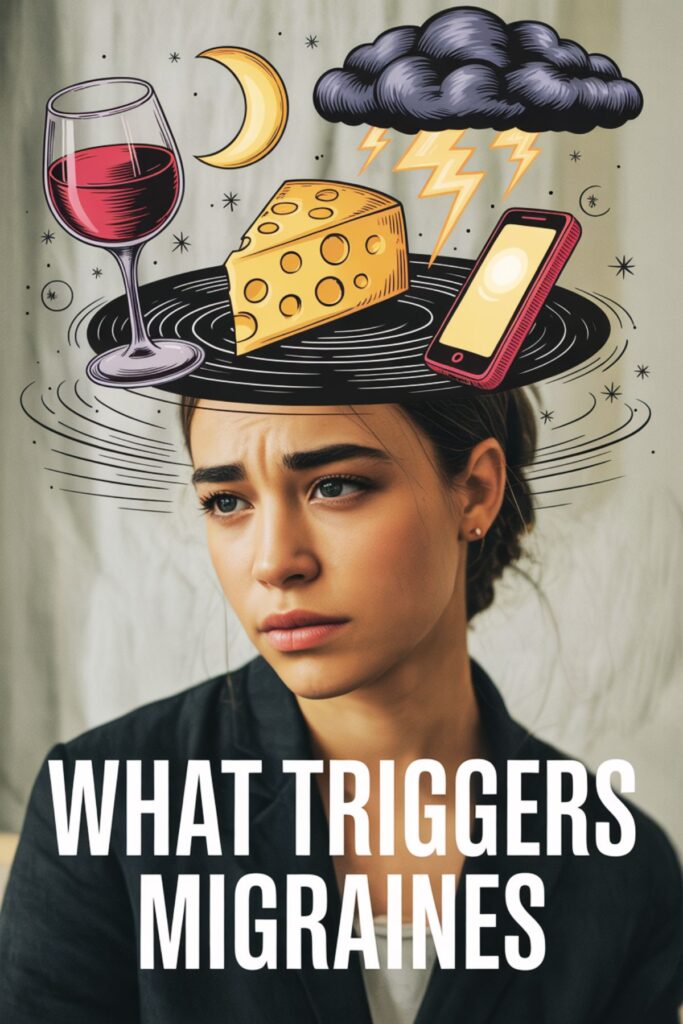
The hormonal rollercoaster. The drop in estrogen right before your period is one of the most common migraine triggers in women. It’s called a menstrual migraine and it hits hard. Tracking your cycle alongside your episodes in an app like Clue can help you predict and prepare; which is a total game-changer. And by the way, check out my Complete Period Pain Relief guide if period pain makes you miserable in more than one way.
Skipping meals (even once). Your brain runs on glucose. When blood sugar drops, even slightly, it can set off the whole chain reaction. This one sneaks up on people who skip breakfast or eat lunch three hours late. Eating something with protein and complex carbs every three to four hours is a genuinely simple fix.
Too much sleep on weekends. This one is genuinely unfair. Sleeping in on Saturday can trigger a migraine because shifting your sleep schedule messes with your serotonin levels. Your brain loves routine more than you think. Set that Sunday alarm.
Barometric pressure changes. Before it rains. Before a storm. Yes, your head can literally feel the weather changing. This is a documented trigger, and if you’ve always suspected it, you were right. A free migraine tracker app like Migraine Buddy actually logs weather patterns alongside your episodes so you can see the correlation over time.
Artificial sweeteners, specifically aspartame. Diet sodas, sugar-free gum, some protein bars. Aspartame is a well-documented migraine trigger for many people. If you consume a lot of these and have frequent migraines, cut them out for two weeks and see what happens. The results can be surprising.
Sensory overload. Fluorescent lights. Crowded malls. Loud restaurants. Long video calls with bright screens. Your nervous system has a threshold, and once it’s crossed, the migraine train has already left the station.
Dehydration, but make it specific. It’s not just about drinking water; it’s about electrolytes. If you drink a lot of water but also sweat, exercise, or drink coffee regularly, you might be flushing out magnesium and sodium; both directly linked to migraine frequency.
Certain foods. Aged cheeses, alcohol (especially red wine and beer), foods with MSG, and very cold foods can all be triggers for some people. This is where a migraine diet journal becomes invaluable, because everyone’s food triggers are slightly different.
Migraine Relief Starts Here: The Magnesium Fix
This is probably the most underrated conversation in the entire migraine world. Studies consistently show that people who get migraines have lower magnesium levels than people who don’t. Magnesium helps regulate neurotransmitters and blood vessel function; both directly involved in migraines.
The form matters enormously. Magnesium glycinate or magnesium threonate are the best-absorbed forms for migraine help. Magnesium oxide (the cheap kind in most supplements) barely absorbs and mostly just gives you a stomach ache. Take it at night; it also helps with sleep and taking it is genuinely one of the best hacks to sleep better.
You can buy a good magnesium glycinate 400mg supplement here and start tonight.
The Cold-and-Hot Protocol for Instant Migraine Relief
When a migraine hits, here’s an exact sequence that genuinely works as an instant DIY migraine relief method:
- Ice pack at the base of your skull, right where your head meets your neck. Hold it there for 15 minutes. The cold constricts the inflamed blood vessels pressing on your nerves.
- Warm foot bath at the same time. Fill a basin with warm-to-hot water and soak your feet while the ice is on your neck. This draws blood circulation downward, away from your throbbing head. It sounds strange. It works.
- Peppermint essential oil on your temples and forehead. Peppermint is one of the most effective essential oils for migraines because the menthol creates a cooling sensation that activates the same nerve receptors pain signals use, essentially blocking them. You want a diluted roll-on specifically for headaches; you can buy one here.
- Drink 16oz of cold water with a pinch of sea salt and a squeeze of lemon. This combination rehydrates and gives your brain a quick electrolyte hit. Not a sports drink. Not a soda. This.
- Lie down in the darkest room you can find, with an eye mask if possible. The best ones have a lavender scent built in, and lavender has mild analgesic properties that actually help. You can find a good one here.
Migraine Pressure Points That Actually Help
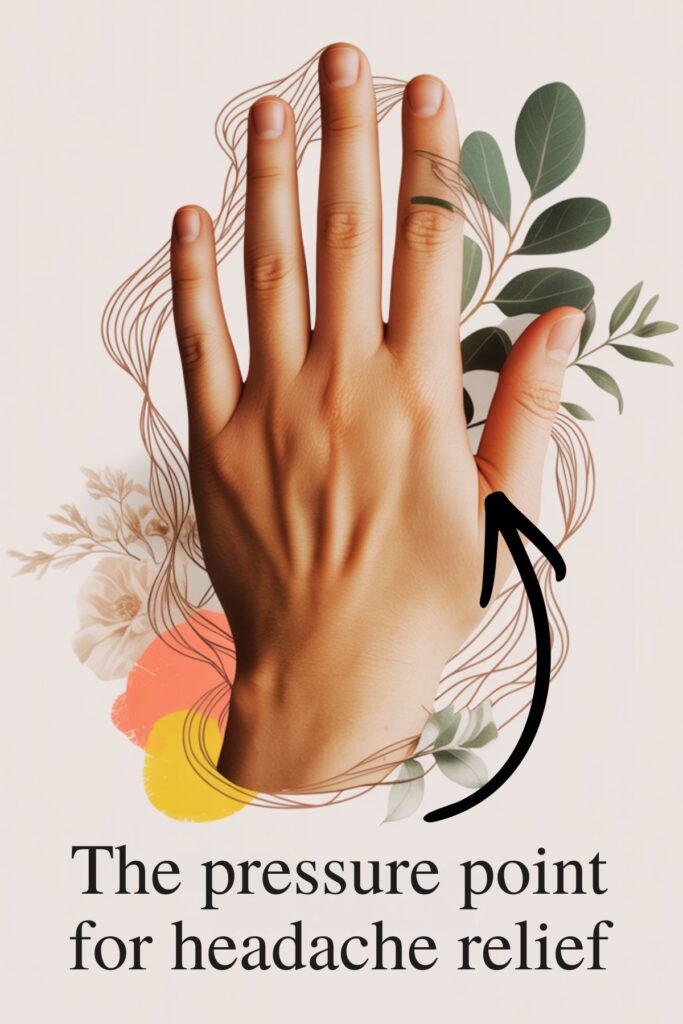
Applying pressure to specific points on your body is a surprisingly effective natural headache reliever during a migraine, and it’s completely free.
LI4 (the hand pressure point): Find the fleshy web between your thumb and index finger. Pinch it firmly and apply steady pressure for 30 to 60 seconds. This is one of the most well-known migraine pressure points and it’s used in acupressure specifically for head pain.
The base of your skull: Use both thumbs to apply firm upward pressure at the two indentations at the base of your skull (called the GB20 points). Close your eyes, breathe deeply, and hold for one minute. This releases tension that contributes to migraine pain.
Your temples: Use your fingertips to apply slow circular pressure on both temples simultaneously. Not a hard rub; small, firm, slow circles.
These pressure point techniques work best at the very start of a migraine, before the pain peaks.
You can also check out the complete guide to pressure points for headaches.
Acupuncture: Surprisingly Worth It
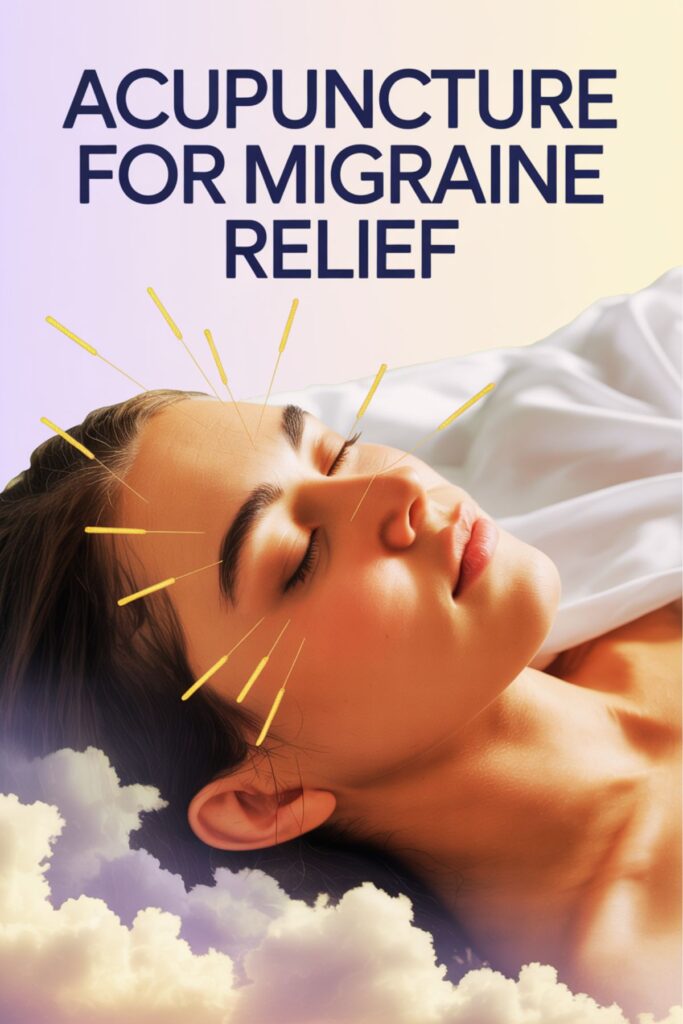
This might not be the first thing that comes to mind for migraine relief, but acupuncture has a genuinely solid body of research behind it for chronic migraines. Several clinical trials have shown it can reduce migraine frequency as effectively as some preventive medications, with zero side effects.
If you have chronic migraines (meaning frequent, recurring episodes that are affecting your quality of life), a course of acupuncture treatments; typically 6 to 10 sessions; is worth seriously considering. Many insurance plans now cover it. Look for a licensed acupuncturist who specifically has experience treating migraines and headaches.
The Daith Piercing: Does It Actually Work?

Let’s talk about the migraine piercing everyone is curious about.
The daith piercing goes through the innermost fold of cartilage in your ear, and the theory is that it stimulates the same acupressure point that acupuncturists target for migraine relief.
The honest answer is: the science is still catching up. There are no large clinical trials confirming it works, but there is a huge amount of anecdotal evidence from people who swear it changed their migraine frequency dramatically.
Some people see a significant reduction, some see no change at all.
What makes it interesting for the migraine community specifically is that the location of the daith piercing corresponds to a vagus nerve branch, and vagus nerve stimulation is actually an emerging area in migraine treatment. So there’s a plausible mechanism, even if it’s not fully proven yet.
If you’re considering a piercing for migraine relief, here are the things to know:
- It needs to be done by a professional piercer with experience in daith piercings specifically; placement matters
- The piercing for migraines goes in the ear on the side where you most commonly feel your migraine pain
- Healing takes 6 to 12 months, and some people report an increase in discomfort before they notice any migraine benefit
- You’ll want high-quality, implant-grade titanium jewelry; search for daith piercing earrings for migraines here
The bottom line: it’s low-risk (it’s a piercing, not surgery), potentially high-reward, and honestly kind of cute. If you’ve tried everything else and are still struggling, it’s worth exploring.
Here you can read my whole guide to daith piercing for migraines.
Ginger: Your Underrated Best Friend for Migraine Headaches
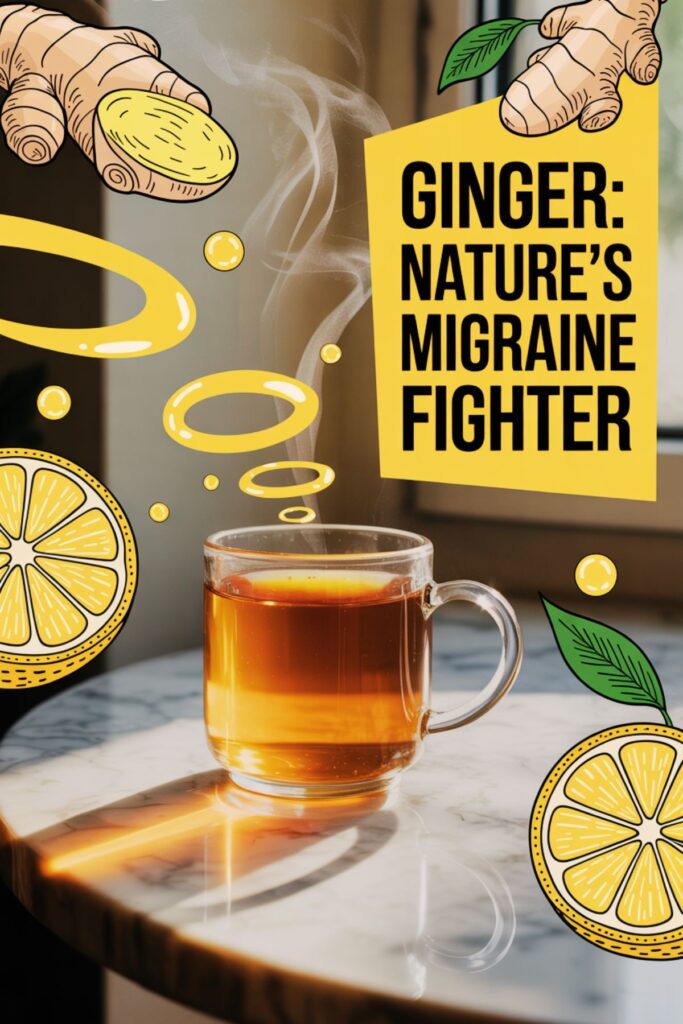
Ginger is genuinely as effective as some prescription migraine drugs in studies for reducing nausea and pain intensity. Here’s the exact way to use it:
Make fresh ginger tea: slice a 2-inch piece of fresh ginger (no need to peel), boil it in 2 cups of water for 10 minutes, strain, add honey and a squeeze of lemon. Drink it slowly at the very first sign of a migraine. The anti-inflammatory compounds work fast when taken early; this is the key.
If you don’t have fresh ginger on hand, high-potency ginger capsules are the next best thing. You can buy them here.
The Caffeine Situation
This one is complicated. A small amount of caffeine can actually abort a migraine in its early stages; that’s literally why it’s in some over-the-counter migraine medications. But if you drink coffee every day, the absence of caffeine becomes its own trigger. If you sleep in and skip your morning coffee, your brain throws a tantrum.
The rule: if you’re a daily coffee drinker and feel a migraine starting, one small espresso at the very beginning of the attack. Not two. Not a giant cold brew. One espresso. Then go straight into the cold-and-hot protocol above.
The Prevention Game: How to Get Rid of Migraines Long-Term
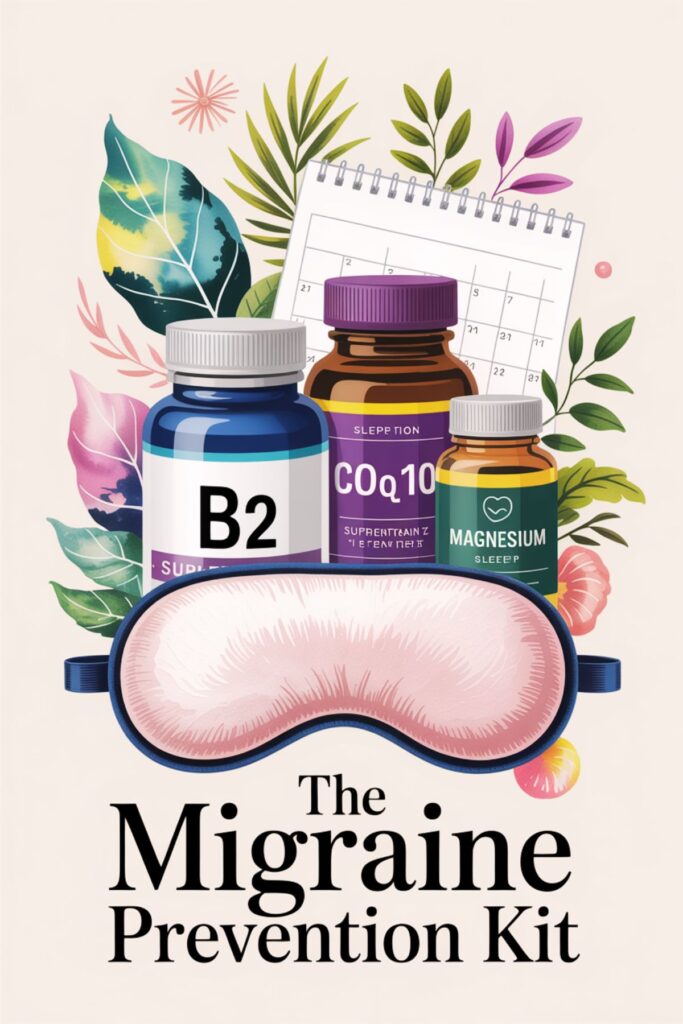
Reactive relief is great. But the real power move is reducing how often migraines happen in the first place. Here’s what actually has evidence behind it.
Riboflavin (Vitamin B2). 400mg daily has been shown in clinical trials to reduce migraine frequency by up to 50% after three months. It’s cheap, safe, and almost nobody talks about it. Your pee will turn neon yellow; that’s completely normal. You can buy it here.
A consistent sleep schedule. Same bedtime, same wake time, even on weekends. This is non-negotiable for chronic migraine sufferers. Set a Sunday alarm if you have to; your brain’s serotonin levels will thank you.
The migraine diet elimination experiment. Cut the top food triggers simultaneously for four weeks: alcohol, aged cheeses, MSG, and artificial sweeteners. After four weeks, reintroduce one at a time to identify your personal culprits. It’s a commitment, but identifying your specific migraine diet triggers can be genuinely life-changing.
Daily magnesium + B2 + CoQ10 stack. This trio together is what many neurologists actually recommend as a first-line preventive approach before going to prescription medications. You can find CoQ10 200mg here.
Track everything. Download Migraine Buddy (it’s free). It logs your triggers, weather, cycle, sleep, and food. After a few months you’ll start seeing patterns that tell you exactly what’s causing yours. A migraine tracker is genuinely one of the most powerful tools you have; knowledge is everything here.
Essential oils for migraines as part of your daily routine. Beyond using peppermint during an attack, lavender essential oil used daily (diffused at night or applied to pulse points) can help reduce nervous system reactivity over time. It won’t cure your migraines alone, but as part of a full prevention routine, it adds up. Check out the full guide to essential oil for headaches for more info.
Types of Migraines Worth Knowing About
Not all migraines are the same, and understanding the type you have can completely change how you approach relief.
Migraine with aura: The one that comes with visual or sensory warning signs before the pain hits. Zigzag lights, temporary blind spots, tingling in one hand or one side of your face. Some people get the aura without any headache at all, which is its own separate thing.
Migraine without aura: The most common type. No warning, just the pain, nausea, and light sensitivity arriving together like uninvited guests.
Chronic migraines: If you’re getting migraines 15 or more days per month, that’s classified as chronic. This is where the prevention strategies in this post become absolutely non-negotiable.
Hormonal migraines: Triggered specifically by the drop in estrogen right before your period. They hit hard, usually on days 1 to 2 of your cycle, and they’re incredibly common in women. Tracking your cycle alongside your migraines can literally change your life.
Vestibular migraines: This one is underdiagnosed and often misunderstood. If your migraines come with dizziness, vertigo, or a sense that the room is spinning; sometimes without much head pain at all; that’s a vestibular migraine. It affects your balance system and can feel very different from a “typical” migraine. Many people with vestibular migraines get misdiagnosed with inner ear problems for years. If dizziness is part of your migraine experience, bring this specific term up with your doctor.
Ocular migraines: These cause temporary vision disturbances or even vision loss in one eye, usually without a headache. Scary the first time it happens, but typically short-lived (20 to 30 minutes).
One Last Thing, For Real
If migraines are hitting you more than four times a month, lasting longer than three days, or just genuinely ruining your life on a regular basis; please see a neurologist. Not a GP, a neurologist. There are actual prescription options (CGRP inhibitors are relatively new and they work really well for people with chronic migraines) and you deserve more than just surviving through it with an ice pack.
Also: if you ever get a migraine that feels suddenly and dramatically different from your usual ones; way more intense, arriving like a thunderclap, or accompanied by fever or a stiff neck; don’t Google it, go to the ER. That one is not up for debate.
You deserve to have your life back. Start with the magnesium tonight.
This post is for informational purposes only and is not a substitute for professional medical advice. Always consult a healthcare provider for medical concerns.
More About How to Get Rid of Headaches
Migraines are their own beast, but headaches come in many forms and each one deserves the right approach. Here are some posts to help:
- How to Get Rid of a Headache: 12 Natural Remedies for Fast Headache Relief
- The Different Types of Headaches and the Relief for Each
- Essential Oils for Headaches: The Natural Headache Remedies That Actually Work
- Pressure Points for Headaches: The Complete Guide to Natural Headache Relief
- Does the Daith Piercing Actually Work for Migraine Relief? The Complete Guide